
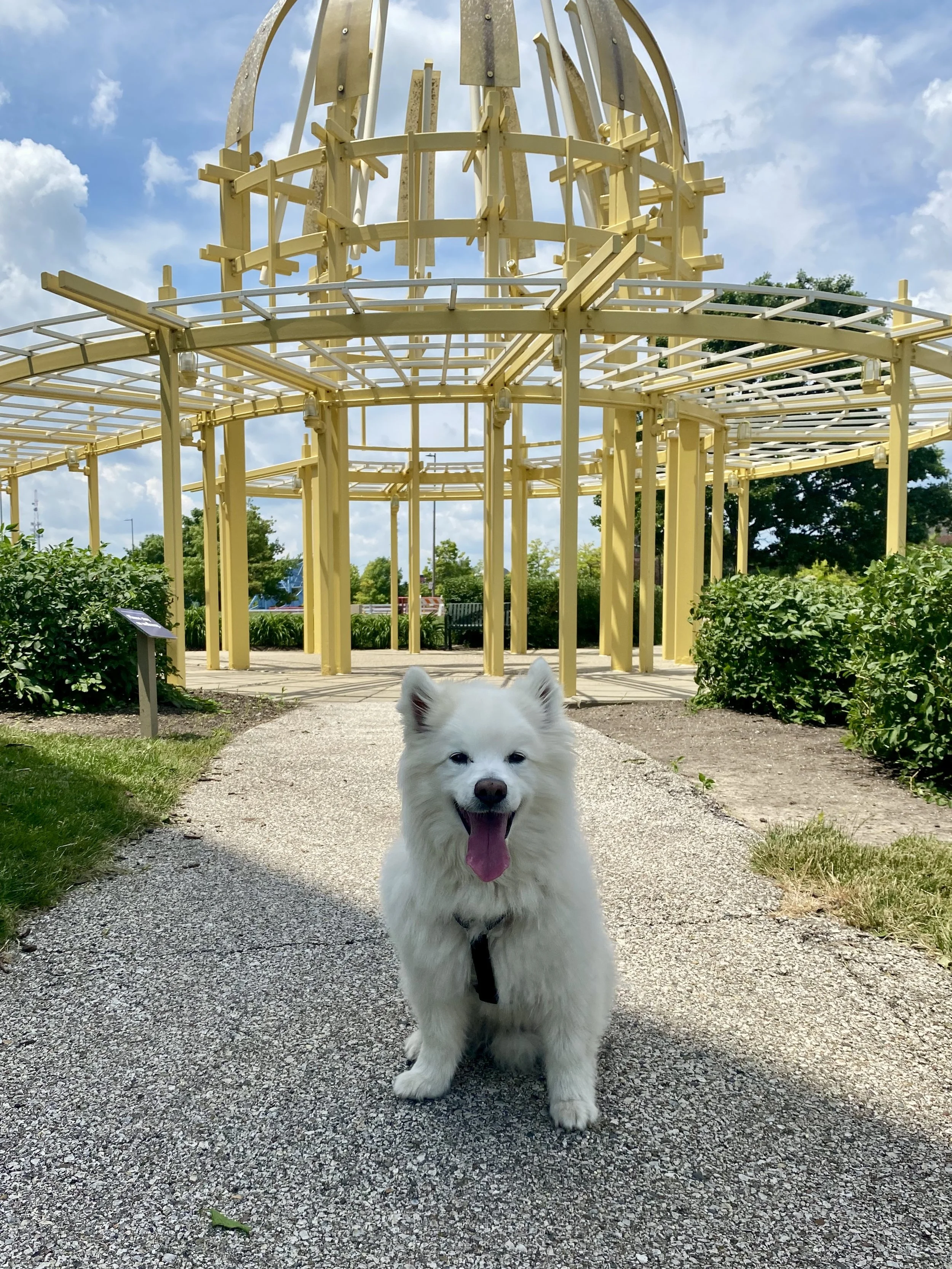
The Science Behind a Happy Dog
Why emotional wellbeing shapes behavior.
For many years, dog care focused mostly on obedience and exercise.
But modern research on animal behavior tells us that a dog’s wellbeing depends on much more than following commands and chasing tennis balls.
Dogs are socially-curious animals who evolved to explore, solve problems, and cooperate with humans. When those instincts are supported, dogs tend to become calmer, more confident and easier to live with.
A happy dog is not just a well “trained dog.”
A happy dog is a properly engaged dog.
What the Research Shows
Decades of studies in animal behavior and welfare science consistently show that all animals thrive when they are given opportunities to make choices and interact meaningfully with their environment.
This concept is often called agency — the ability for an animal to influence what happens in their own life.
Researchers found that dogs who experience choice, exploration, and mental engagement often show:
lower stress levels
improved emotional resilience
stronger relationships with their humans
increased curiosity and confidence
Rather than reducing control, giving dogs appropriate choices often improves cooperation.
How Happiness Works in Dogs
Dogs don't measure happiness the way humans do, but their behavior gives us clear clues about what they enjoy.
Dogs tend to thrive when they experience:
predictable routines
opportunities to explore new environments
social interaction with familiar dogs and people
mental challenges and problem-solving
moments of rest after meaningful activity
When these elements are present, many dogs naturally become more relaxed and adaptable.
In the past many training systems focused on controlling behavior.
Modern animal behavior science has shifted towards understanding how animals participate in their own experiences.
When dogs can explore, investigate, and make small choices about their environment, they tend to feel more secure.
This sense of participation helps dogs regulate stress and build confidence.
Rather than being passive recipients of commands, dogs become attentive to cues as active participants in their own lives.
Why This Matters to ChirpDog
The ChirpDog approach is built around the idea that dog’s thrive when they are given opportunities to think, explore, and communicate.
Through structured enrichment, social interaction, and language exposure, dogs are invited to participate in their environment rather than simply follow instructions.
Some dogs discover new games.
Some learn new skills.
Some simply gain a new confidence in exploring the world.
The goal is not perfect obedience.
Happy is the goal.
the future is listening
Further reading: Mellor, D.J. (2016). Updating animal welfare thinking: Moving beyond the Five Freedoms toward a life worth living.